TheyaVue blog
When the Page Claims More Than the Bottle
The label is a regulated document. The headline above it is an advertisement. They are not required to agree, and often they do not.
On this page
- Two documents, two sets of rules
- What a supplement label may say
- What only a drug may say
- Nobody approves the wording first
- The sentence that travels with the claim
- The bottle and the page, side by side
- Why this matters more on an eye product
- The thirty-second check
- What the check proves and what it does not
Start here
Two documents, two sets of rules
A supplement bottle and the page selling it look like one piece of communication. They arrive together and a buyer reads them as one voice. They are two documents written to different rules, and when they disagree almost nobody notices.
The label is a regulated form: its contents, its units and the sentences it may carry are specified. The page is an advertisement, and nothing forces it to describe the same product in the same terms.
TheyaVue is the worked example, and a clean one, because the bottle here is written correctly and the page is not.
Structure/function
What a supplement label may say
The regulations recognise a narrow kind of claim that a dietary supplement is permitted to make about itself. The FDA describes it like this: A structure/function claim may “describe the role of a nutrient or dietary ingredient intended to affect the normal structure or function of the human body, for example, ‘calcium builds strong bones.’”
Read the example, not the rule
The agency’s illustration is deliberately modest, and the most useful part of the definition. Calcium builds strong bones. That is the shape of the strongest sentence this category may print: a nutrient, a normal body function, a contribution rather than a cure.
What that shape does and does not certify
Supports, helps maintain, contributes to: not weasel words, but the outline of the only claim a supplement may make. A bottle described as a support formula is a company that read the rule and followed it. What that does not certify is the evidence: the right shape does not tell you the ingredient works, or that anybody has looked.
Disease claims
What only a drug may say
On the other side of the line is the kind of claim that changes what a product legally is. A disease claim says a product can “diagnose, treat, cure or prevent any disease”. Only drugs may legally make one.
Where the line actually falls
Not on how confident the sentence sounds, but on whether it promises to act on a disease or a diagnosable condition. A product may say it supports eye health; it may not say it treats macular degeneration. It may say it supports normal vision; it may not say it restores eyesight to a measured standard, because a visual acuity is a clinical outcome, and promising to correct one is promising to treat.
The permitted sentence is vague by design and the forbidden one is specific, and specificity sells — so the strongest language in this category rarely appears on the container, and very often appears on the page.
The rule
Nobody approves the wording first
Now the part that surprises almost everybody, and it is the reason a well-written label proves less than people think. These claims “are not pre-approved by FDA, but the manufacturer must have substantiation that the claim is truthful and not misleading and must submit a notification with the text of the claim to FDA no later than 30 days after marketing.”
Nobody clears the wording in advance
There is no desk at which a claim is submitted, reviewed and approved before printing. The manufacturer writes the words and the bottle ships. A phrase on a front panel has not passed anything; a correct label describes its author’s care, not an inspection.
The evidence lives in a filing cabinet
Substantiation is a real obligation, but the evidence sits in the company’s own files. Nothing requires it to be published and no register exists, so the absence of a study you can read does not prove there is nothing behind a claim.
The agency is told afterwards
The notification goes to the FDA no later than thirty days after marketing begins. The product is on sale by the time the agency learns what the label says, and a notification is a filing, not an endorsement. Anyone telling you a claim was FDA-cleared is describing a process that does not exist.
The disclaimer
The sentence that travels with the claim
A structure/function claim is not supposed to travel alone. A disclaimer goes with it to say what the claim does not mean: “FDA has not evaluated the claim. The dietary supplement product is not intended to ‘diagnose, treat, cure or prevent any disease.’”
In practice this is the sentence you have read a thousand times without reading it: “These statements have not been evaluated by the Food and Drug Administration. This product is not intended to diagnose, treat, cure or prevent any disease.”
Train your eye on the asterisk
It is usually set in the smallest type on the package, beside an asterisk tying it back to a claim on the front. When a sentence that reads like a promise carries no asterisk and no disclaimer appears anywhere you can see, that is either an oversight or a decision, and from outside there is no way to tell which. The disclaimer is not an admission that the product is useless; it is the sentence telling you what you are holding.
Worked example
The bottle and the page, side by side
What the bottle says
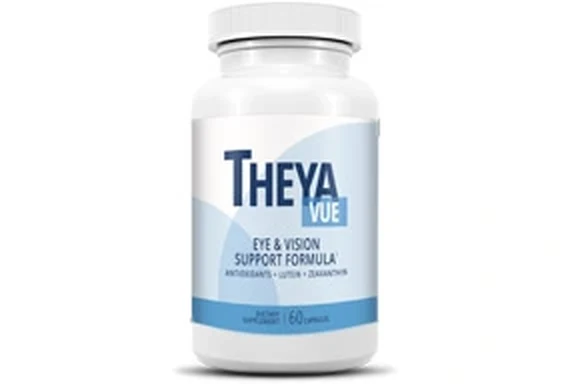
The front carries four lines: the wordmark, “Eye & Vision Support Formula” in capitals, “ANTIOXIDANTS + LUTEIN + ZEAXANTHIN”, and “DIETARY SUPPLEMENT · 60 CAPSULES”. That is a properly written structure/function claim. It says support, names no disease and promises no measurement, and the FDA disclaimer is printed along the bottom edge of both listing cards, where it belongs. The label is not the problem on this product.
What the page says
The order button leads to a sales page, and the pack we were given records that page’s title. We print it once, as what it is:
The title of the sales page the order button leads to
“3-Second “Rapid Finger Trick” Restores Blurry Eyesight To 20/20”
That is the headline of an advertisement. It is not a claim this site makes, endorses or has evidence for; it is reproduced only so the comparison can be made.
Restoring blurry eyesight to 20/20 is not support. It is a promise to correct a measured clinical outcome, which is a claim only a drug may make. The bottle and the page describe two different products, and only one of them exists.

The specific risk
Why this matters more on an eye product
Every category has this problem, but eye products have a specific reason to care, and the FDA has said so about unapproved eye products sold against serious conditions:
Why the FDA acts on eye claims
“Unapproved drugs claiming to cure serious conditions may lead consumers to delay or abandon proven, safe treatments.”
The harm named here is not the money
Money is recoverable, and this product carries a sixty-day window. Time is not. The weeks between noticing your sight has changed and sitting in front of somebody who can look inside your eye are what is at risk, and a headline promising to restore vision is the sentence that buys those weeks from you.
What to do instead
Buy this, if you buy it, for what the Supplement Facts panel contains. Do not buy it for the sentence at the top of the page it is sold from. And if your eyesight has actually changed, the National Eye Institute is unambiguous about what to do first: “A dilated eye exam is the only way to check for many eye diseases early on, when they’re easier to treat.”
Four steps
The thirty-second check
Read the strongest sentence on the container
Not the page, not the advert. Ask whether it promises a change you could measure: a number, a diagnosis, a cure. A support claim will not.
Find the disclaimer
Turn the package until you find the small-type sentence saying the statements have not been evaluated by the Food and Drug Administration. If it is nowhere on the packaging, treat everything else with more care.
Now read the page that sold it to you
Headline first. If the page promises something the container does not, you have found the gap.
Believe the container
The panel and the front of the box are the regulated part. Buy for what those say, and treat the rest as an advertisement, because that is what it is.
Thirty seconds, and it asks you to judge nothing: only whether the two documents agree, which anybody can answer without expertise and a great many products quietly fail.
Closing
What the check proves and what it does not
Be careful what that result means. A gap does not show that the seller holds no substantiation or that anybody set out to deceive. What it shows is which document to trust.
On this product the finding is clear-cut, and it cuts both ways. The bottle is written correctly, carries a proper support claim and prints the disclaimer where it belongs. The page it is sold from is titled with a promise about measured eyesight that no dietary supplement may make. Credit the first. Ignore the second.
The honest version
Buy this, if you buy it, for what the Supplement Facts panel contains — the supplement facts page prints every line, including the 240.5 mg blend whose split is not published. Do not buy it for a sentence about 20/20. If your eyesight has changed, a dilated eye exam is the only way to check for many eye diseases early on, when they are easier to treat. Our earnings disclosure and the full FDA statement are on the disclaimer page.
References
Sources
- U.S. Food and Drug Administration. Structure/Function Claims. www.fda.gov. Accessed September 23, 2026.
- U.S. Food and Drug Administration. FDA Issues Warning Letters to Firms Marketing Unapproved Eye Products. www.fda.gov. Accessed September 23, 2026.
- U.S. Food and Drug Administration. Information for Consumers on Using Dietary Supplements. www.fda.gov. Accessed September 23, 2026.
- National Eye Institute, NIH. Keep Your Eyes Healthy. www.nei.nih.gov. Accessed September 23, 2026.
- NIH Office of Dietary Supplements. Dietary Supplements: What You Need to Know. ods.od.nih.gov. Accessed September 23, 2026.
Order TheyaVue from the official page
Vegetable capsules, 60 capsules a bottle, two a day before meals, so thirty days a bottle. Twenty-five ingredients on the panel and a 240.5 mg blend whose split is not published. Prices and the 60-day window are on the listing; sales line +1 (315) 724-2018.
Price shown at checkout · 60-day window from purchase · ships from inside the US · sales line +1 (315) 724-2018
Next
Keep reading
The whole published panel
Every printed line, and the things this label does not publish at all.
Read it →The full disclaimer
The FDA statement, the earnings disclosure and this site’s label-first policy.
Read it →The trial behind the ingredients
What AREDS2 tested, in whom, and the two findings buyers rarely see.
Read it →