TheyaVue blog
What the AREDS2 Trial Actually Found
It is a real trial with real numbers. It is also not the trial most eye supplements imply it is.
Start here
Two trials, one famous formula
Pick up almost any eye supplement and the same research is standing behind it, usually without being named. Lutein, zeaxanthin, zinc, copper, vitamin C and vitamin E turn up together on bottle after bottle because a pair of large federal trials put them together first: the Age-Related Eye Disease Studies, run by the National Eye Institute as AREDS and then AREDS2.
They are real trials with published formulations and published findings, which makes them unusual in a category built mostly on impressions. They are also the most misquoted research in the aisle: a bottle does not have to lie to mislead you here, it only has to mention the trial and leave out who was in it. TheyaVue is the worked example at the end.

The numbers
The two formulations, exactly as published
Start with the numbers, because they are the part everyone gestures at and nobody prints. NEI lists the original AREDS formulation as:
The AREDS formulation
“Vitamin C 500 mg, Vitamin E 400 IU, Beta-carotene 15 mg, Copper (cupric oxide) 2 mg, Zinc 80 mg”
And the AREDS2 formulation, the one almost every modern label is imitating, as:
The AREDS2 formulation
“Vitamin C 500 mg, Vitamin E 400 IU, Copper (cupric oxide) 2 mg, Lutein 10 mg, Zeaxanthin 2 mg, Zinc 80 mg”
Two things to notice straight away
The first is that these are daily amounts of specific substances, not a family of ingredients. Vitamin C at 500 mg is roughly five times a day’s requirement for an adult, and zinc at 80 mg is double the 40 mg upper limit the NIH Office of Dietary Supplements sets from all sources combined. These are trial doses for a trial population under medical supervision, not a recommendation for everyone with eyes.
The second is the difference between the lists. Beta-carotene is in the first and gone from the second; lutein and zeaxanthin are in the second and absent from the first. That swap is the whole story of AREDS2, and it has its own section below.
The enrolment
Who the trial actually enrolled
Here is the sentence that changes how you read every eye supplement on the shelf. AREDS2 was run in people who already had intermediate or advanced age-related macular degeneration. It was not a study of healthy eyes, or of anyone worried about their eyes in the ordinary way.
Why that changes the meaning of every result
A trial answers exactly one question: what happened to these people, taking this, over this period, compared with those who did not. When it enrols people with an established, progressive eye disease, the result describes that disease at that stage. Carrying it across to someone with healthy eyes is not a cautious extrapolation; it is a different claim with no trial behind it.
Nothing on a bottle has to be false for this to work. A label can name the ingredients, imply the trial and let the reader supply the rest, because the reader assumes a study of an eye supplement was a study of people like them. That assumption does the selling, and nobody has to write it down.
The outcome measured
What slowing progression means
The phrase attached to these trials is “slowing progression”, and it is heard as something it does not say.
What it is not
It is not improvement. Nothing in these trials restored vision that had gone or moved anybody up a line on a chart. Progression is the disease getting worse over time, and slowing it means that worsening happens more slowly across a group. An individual does not feel a change, because there is nothing to feel: the outcome is a difference in risk measured across a population over years.
What it is, and what follows from it
A statement about odds in a defined group at a defined stage of disease. That is a genuine finding for the people it describes, and it is why an eye doctor may recommend a formulation after an examination — advice from somebody who has looked inside your eyes, not from the front of a box. If you are reading a label because your eyesight has changed, the trial has nothing to offer you yet, because nobody has established what is changing.
The nulls
The two findings buyers almost never see
NEI publishes two findings about these formulations that you will almost never see quoted on a product page.
They do not prevent the disease
“AREDS and AREDS2 supplements do not prevent AMD onset.” They gave no benefit to people without AMD or with early-stage disease. If your eyes are healthy, this is the finding that applies to you, and it is a negative one.
They did not help with cataracts
“None of the formulations decreased cataract risk.” Worth holding onto, because cataract is the eye condition most people can name. Put those two sentences beside the way this category is sold and the gap is obvious: the trial is invoked for a general audience, and for that audience it published two nulls.
The safety note
Why beta-carotene was taken out
AREDS2 removed beta-carotene, and the reason was not that it stopped working.
What NEI reports
“AREDS2 participants who were former smokers who took a formulation with beta-carotene had a higher incidence of lung cancer.” The guidance that follows is explicit: “Current and former smokers should take the AREDS2 formula and avoid the AREDS formula with beta-carotene, which increases lung cancer risk.”
What to do with it
Beta-carotene is still a common way to put vitamin A on an eye label, and the people most affected are the least likely to be told. Turn any eye supplement over and read the vitamin A row. If it says beta-carotene and you smoke or used to, that is the row to raise with a clinician before you start — not because a small amount is known to be harmful, but because this is the one ingredient in the category with a federal warning attached to a named group. The studies behind that finding used high-dose supplements rather than the small amounts on a typical panel, which is a real distinction and not a reason to skip the conversation.
Worked example
The comparison, run on this bottle
| Ingredient | AREDS2 used | Per capsule | At two capsules | What that means |
|---|---|---|---|---|
| Vitamin C | 500 mg | 100 mg | 200 mg | Still well under AREDS2 |
| Vitamin E | 400 IU | 10 mg | 20 mg | Different units, but 10 mg is 66% of a day’s requirement and AREDS2 used many times that |
| Zinc | 80 mg | 16 mg | 32 mg | Under AREDS2, and 80% of the 40 mg upper limit |
| Copper | 2 mg | 1 mg | 2 mg | Matches AREDS2 at two capsules |
| Lutein | 10 mg | not published | not published | Somewhere inside the 240.5 mg blend, split ten ways |
| Zeaxanthin | 2 mg | not published | not published | Somewhere inside the same blend |
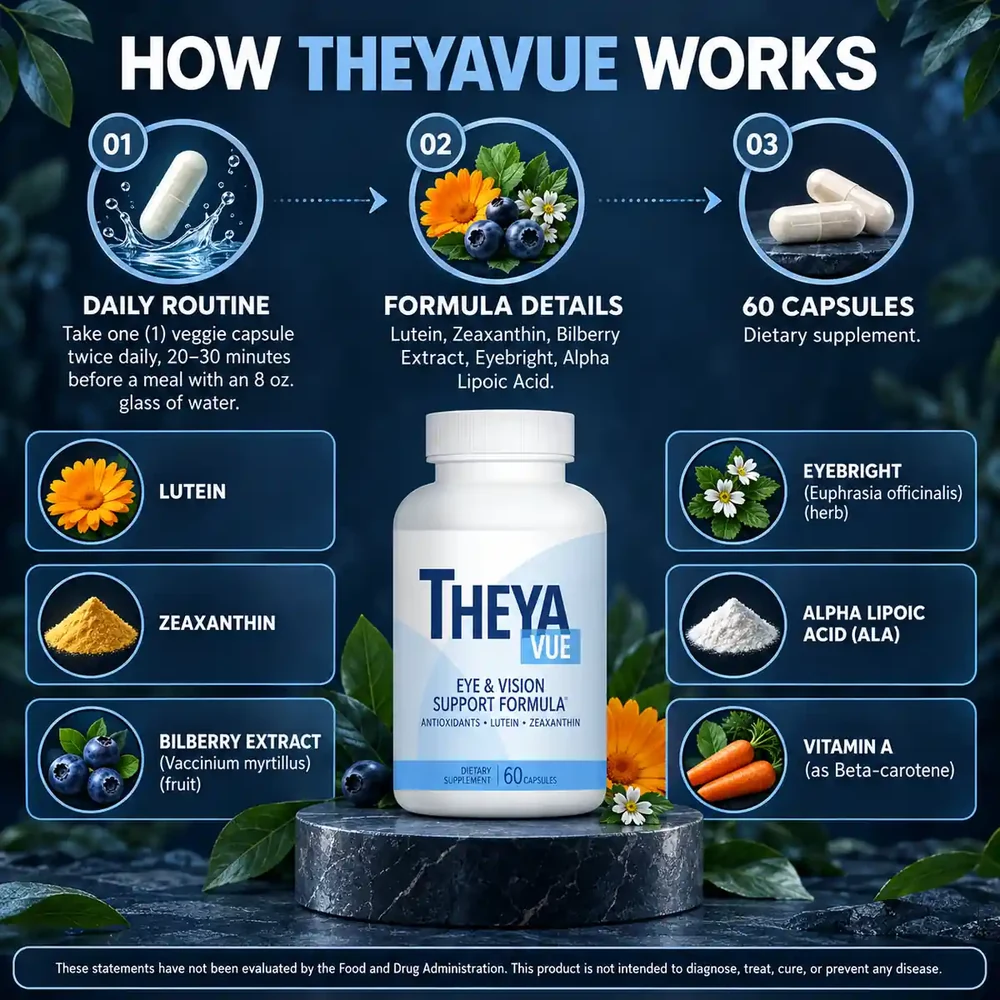
| Beta-carotene | removed in AREDS2 | 50 mcg RAE | 100 mcg RAE | AREDS2 took it out because of lung cancer risk in smokers |
One row matches. Every other row that can be compared is below the trial amount, and the two rows the whole category is sold on — lutein and zeaxanthin — cannot be compared at all, because their amounts sit inside a proprietary blend. If the entire 240.5 mg blend were lutein it would clear AREDS2’s 10 mg many times over. It is not: it is ten ingredients sharing one number, and the split is not published.
Four AREDS2 ingredients appear on this panel with amounts you can read: vitamin C, vitamin E, zinc and copper. Only copper matches at the directed dose, at 2 mg. The other three are below the trial figure, zinc substantially so. Lutein and zeaxanthin cannot be compared at all. And the vitamin A here is beta-carotene, the ingredient AREDS2 removed.
And here is the part that matters more than any row in that table. AREDS2 was run in people who already had intermediate or advanced age-related macular degeneration. NEI’s own summary of both trials is blunt: the supplements “do not prevent AMD onset”, and they gave no benefit to people without AMD or with early-stage disease. On cataracts the finding is flatter still: “None of the formulations decreased cataract risk.” A healthy-eyed buyer taking this because of a trial they half remember is taking it for a result that trial did not produce in people like them.
Closing
What this does and does not settle
None of this shows the product does nothing, which would be a claim of its own. It shows something narrower: the research this category borrows its authority from was run in a specific group, at specific amounts, and reported two nulls for everybody else. A label that overlaps with four of its ingredients and matches one has not reproduced that trial.
The honest version
If you already have an AMD diagnosis, the formulation question belongs with your eye doctor, who knows your stage. If your eyes are healthy, NEI’s summary is the finding that describes you. Either way the first appointment matters more than the first bottle: a dilated eye exam is the only way to check for many eye diseases early on. The ingredients page works through all twenty-five rows on this panel, and the supplement facts page lists what the label does not publish.
References
Sources
- National Eye Institute, NIH. About the Age-Related Eye Disease Studies (AREDS and AREDS2). www.nei.nih.gov. Accessed September 23, 2026.
- National Eye Institute, NIH. Keep Your Eyes Healthy. www.nei.nih.gov. Accessed September 23, 2026.
- NIH Office of Dietary Supplements. Zinc. ods.od.nih.gov. Accessed September 23, 2026.
- NIH Office of Dietary Supplements. Vitamin A and Carotenoids. ods.od.nih.gov. Accessed September 23, 2026.
- NIH Office of Dietary Supplements. Dietary Supplements: What You Need to Know. ods.od.nih.gov. Accessed September 23, 2026.
Order TheyaVue from the official page
Vegetable capsules, 60 capsules a bottle, two a day before meals, so thirty days a bottle. Twenty-five ingredients on the panel and a 240.5 mg blend whose split is not published. Prices and the 60-day window are on the listing; sales line +1 (315) 724-2018.
Price shown at checkout · 60-day window from purchase · ships from inside the US · sales line +1 (315) 724-2018
Next
Keep reading
All twenty-five, one at a time
Every ingredient on the panel, and what the federal page for it says.
Read it →The whole published panel
Every printed line, and the things this label does not publish at all.
Read it →Why two rows cannot be compared
What a proprietary blend is allowed to leave out, and why it matters here.
Read it →